
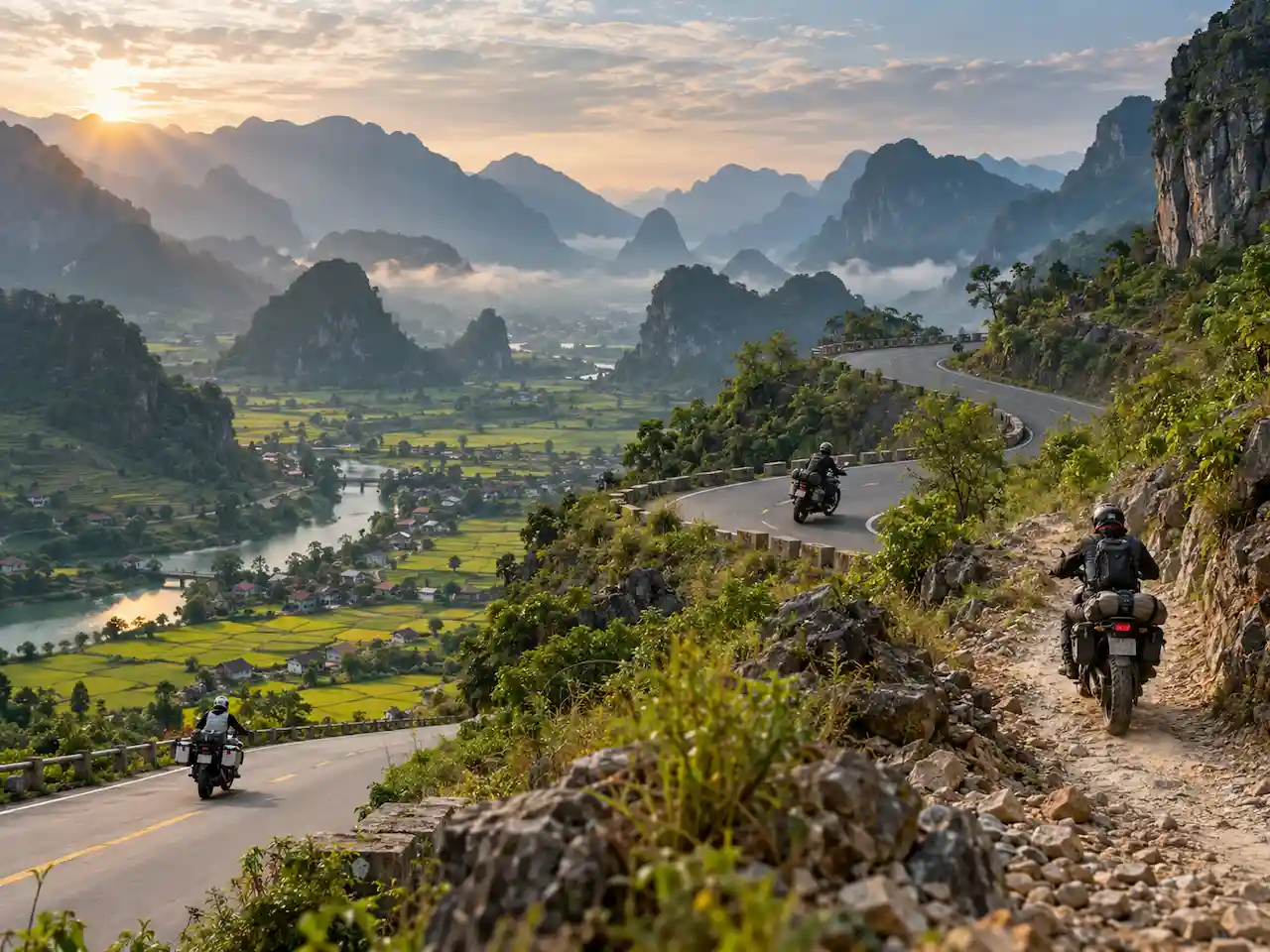
Northern Vietnam is one of the most rewarding regions for motorcycle travel, with winding mountain roads, peaceful valleys, terraced rice fields, and remote villages. However, not every route is suitable for every rider. Finding the best North Vietnam motorcycle routes means choosing roads that match your experience, confidence, and travel goals rather than simply selecting the most famous destination.
For travelers from the USA and Australia, understanding route difficulty is especially important because mountain conditions can differ significantly from familiar roads at home. I always recommend evaluating your riding ability, the season, and the type of tour before planning an adventure. The right route allows you to enjoy the scenery while managing the challenges responsibly.
Why Northern Vietnam Is Popular for Motorcycle Adventures
Northern Vietnam offers a remarkable combination of natural landscapes and cultural experiences. Riders can travel through limestone mountains, agricultural valleys, traditional villages, and winding roads that reveal a different view around almost every corner. Unlike straightforward highway journeys, these routes often involve frequent elevation changes and varying road surfaces.
The region also offers routes with different levels of difficulty. Some valleys have relatively manageable roads suitable for confident riders with limited mountain experience, while remote mountain passes demand advanced braking, cornering, and hazard awareness. This variety makes Northern Vietnam attractive to travelers seeking different types of motorcycle adventures.
I believe the most enjoyable journey is not necessarily the longest or most challenging. A carefully chosen route provides enough excitement to feel rewarding without pushing riders beyond their abilities.
Understanding Motorcycle Route Difficulty in Northern Vietnam
Before selecting a route, it is important to understand what makes motorcycle riding difficult. Distance alone is not a reliable measure because a short mountain journey can be more demanding than a longer ride on well maintained roads.
Sharp bends, steep gradients, narrow sections, loose gravel, and changing weather can increase the difficulty of a route. Rural roads may also involve livestock, pedestrians, trucks, and limited visibility around corners.
Beginner, Intermediate, and Advanced Riding Levels
For planning purposes, I divide motorcycle routes into three experience levels. These are practical recommendations rather than official road difficulty classifications.
| Riding level | Typical experience | Suitable route characteristics |
| Beginner | Limited motorcycle touring or mountain experience | Shorter daily distances, manageable gradients, and flexible stops |
| Intermediate | Confident on winding roads and longer journeys | Mountain passes, changing elevations, and extended riding days |
| Advanced | Experienced with technical mountain riding | Tight hairpin bends, steep gradients, variable surfaces, and remote conditions |
A beginner route is not automatically safe for someone who has never operated a motorcycle. Riders still need appropriate legal authorization, basic motorcycle control, and the confidence to respond to unexpected hazards.
For travelers who prefer not to ride themselves, a professionally operated passenger tour may provide access to scenic routes without the responsibility of controlling the motorcycle.
Mai Chau Valley: A Suitable Introduction to Northern Vietnam
Mai Chau is a strong starting point for travelers who want to experience Northern Vietnam without immediately tackling its most demanding mountain passes. The area is known for peaceful agricultural valleys, traditional villages, and mountain scenery that creates a relaxed introduction to countryside travel.
Routes around the valley can include manageable stretches of road and opportunities to stop at viewpoints or local communities. However, the approach roads from Hanoi and nearby mountainous areas can still involve significant bends, traffic, and elevation changes.
Who Should Choose Mai Chau?
Mai Chau is particularly appealing to confident beginners and travelers who prefer a slower pace. It offers opportunities to experience rural landscapes without making technical mountain riding the main focus of the journey.
I recommend selecting shorter riding sections, allowing extra time for sightseeing, and avoiding unnecessary pressure to cover long distances. Travelers with limited motorcycle experience should consider a guided passenger arrangement rather than assuming that the easier scenery makes self riding suitable.
For riders progressing toward more challenging adventures, Mai Chau can also help build familiarity with local traffic patterns and mountain road conditions.
Mu Cang Chai: Scenic Riding Through Rice Terraces
Mu Cang Chai is famous for its terraced rice fields and dramatic mountain landscapes. The roads leading through the region offer beautiful viewpoints, changing elevations, and an opportunity to experience rural Northern Vietnam beyond major tourist centers.
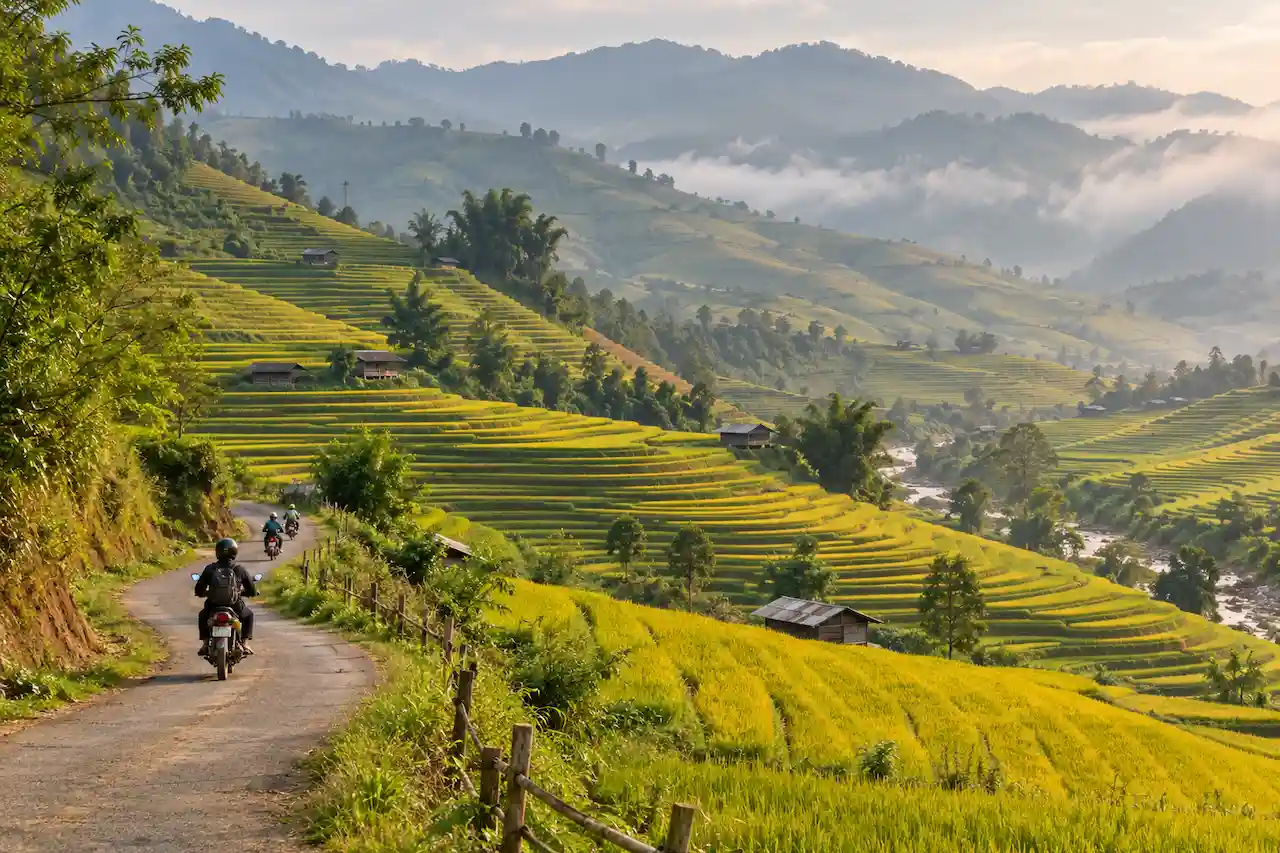
The route can become more demanding around steep mountain sections, particularly near Khau Pha Pass. Tight bends, fog, rain, and limited visibility can increase the challenge, especially for travelers unfamiliar with mountainous terrain.
Is Mu Cang Chai Suitable for Intermediate Riders?
Mu Cang Chai is generally better suited to confident intermediate riders who are comfortable with mountain roads and changing conditions. It can be particularly rewarding for travelers who enjoy photography, landscape exploration, and quieter rural destinations.
I recommend planning manageable daily distances and checking weather conditions before attempting higher passes. Wet surfaces and reduced visibility can change the difficulty of a route considerably.
Travelers should also avoid planning every day around a fixed arrival time. Allowing flexibility makes it easier to stop safely, respond to weather changes, and enjoy the journey.
Sapa and O Quy Ho Pass: For Confident Intermediate Riders
Sapa is one of Northern Vietnam’s best known mountain destinations, surrounded by high peaks, terraced valleys, and villages where traditional agricultural life remains visible. The roads approaching Sapa offer remarkable scenery, but riders should prepare for steep climbs, winding sections, and weather that can change rapidly at higher elevations.
O Quy Ho Pass is a major attraction in this region. Its sweeping mountain views and changing elevations make it memorable, while fog, wind, and wet road surfaces can create difficult riding conditions. The pass requires controlled speed, careful cornering, and attention to other vehicles.
What Makes the Sapa Route Challenging?
The biggest challenge is the combination of elevation, road geometry, and visibility. A road that feels manageable in clear weather can become demanding when clouds cover the mountains. Riders also need to remain alert around tourist vehicles, roadside activity, and unexpected hazards.
I recommend Sapa for intermediate riders who already feel comfortable navigating mountain bends and extended riding days. Beginners can still experience the scenery as passengers with qualified local riders, provided suitable tour arrangements and insurance are confirmed.
Sapa is included in our published northern itineraries, making it an attractive destination for travelers interested in combining mountain scenery with cultural exploration.
Ha Giang Loop: A Challenging Route for Experienced Riders
Ha Giang is among Northern Vietnam’s most dramatic motorcycle destinations. The region features towering limestone mountains, narrow roads, deep valleys, and remote communities. Its landscapes are extraordinary, but the riding conditions require preparation and confidence.
The Ha Giang Loop commonly includes destinations such as Quan Ba, Dong Van, and the famous Ma Pi Leng Pass. These sections offer breathtaking viewpoints alongside demanding corners, steep gradients, and changing road surfaces.
Why Ha Giang Requires Advanced Riding Skills
Ha Giang can be physically and mentally demanding because riders must concentrate for extended periods. Narrow mountain sections may involve sharp bends, limited visibility, and steep drops beside the road. Rain or fog can increase the difficulty considerably.
For self riding, I recommend Ha Giang primarily to experienced riders who are comfortable with technical mountain roads and have the required legal driving authorization. Less experienced travelers should consider a professionally operated passenger tour rather than attempting difficult sections independently.
Our existing article on the Ha Giang motorcycle tour experience provides further information about this northern adventure.
Cao Bang and Ba Be Lake: For Experienced Touring Riders
Cao Bang offers an appealing combination of mountain roads, limestone scenery, rural villages, and natural attractions. Ban Gioc Waterfall is a major highlight, while the surrounding countryside provides opportunities to experience quieter parts of Northern Vietnam.
The journey toward Ba Be Lake introduces another side of the region, with forested mountains, lakeside scenery, and rural roads. These destinations are particularly rewarding for travelers who enjoy longer itineraries and cultural stops rather than focusing only on famous mountain passes.
What Riding Experience Is Recommended?
I generally recommend these routes for confident intermediate to advanced touring riders. Although some sections may be less technically demanding than the steepest Ha Giang passes, the longer distances, changing road surfaces, and remote locations require endurance and sound judgment.
Travelers should consider the number of riding hours, availability of rest stops, weather conditions, and access to support before selecting an itinerary. Riding through remote areas requires preparation, even when the scenery appears peaceful.
Cao Bang and Ba Be Lake are included in the published Grand North Vietnam itinerary, allowing travelers to experience several northern landscapes within one extended journey.
How to Choose the Right North Vietnam Motorcycle Route
Choosing among the best North Vietnam motorcycle routes requires an honest assessment of your experience. The most scenic road is not automatically the best option for your trip, especially when unfamiliar traffic, mountain conditions, and long riding days are involved.
I recommend evaluating the following factors before booking:
- Riding experience: Consider your confidence with steep gradients, hairpin bends, and unfamiliar roads.
- Daily distance: Longer riding days require physical endurance and sustained concentration.
- Weather conditions: Rain, fog, and strong winds can make mountain roads more difficult.
- Travel duration: Choose an itinerary that leaves enough time for rest and sightseeing.
- Legal eligibility: Confirm that you hold the appropriate driving authorization and insurance for self riding.
For travelers from the USA and Australia, licensing deserves particular attention. Standard American and Australian driving licenses and their issued international driving permits do not independently authorize ordinary motorcycle riding in Vietnam. Travelers who cannot legally operate a motorcycle should investigate passenger tour options.
Choosing Between a Guided Tour and Self Riding
A guided self ride tour allows travelers to operate their motorcycles while following a professional guide. This arrangement can be suitable for experienced riders who meet Vietnamese licensing requirements and want assistance with navigation and itinerary planning.
A passenger tour provides a different experience. An appropriately licensed professional operates the motorcycle, allowing the traveler to focus on the scenery and cultural stops. This can be particularly useful for beginners, visitors unfamiliar with local traffic, or travelers without recognized riding authorization.
Our versus self ride motorcycle tour guide explains the differences between these options and the factors worth considering before booking.
Best Time to Explore Northern Vietnam by Motorcycle
Weather plays a major role in the difficulty and enjoyment of northern motorcycle routes. Mountain regions can experience fog, rain, cool temperatures, and changing visibility throughout the year. Conditions also vary between valleys and higher elevations.
Spring and autumn can offer appealing touring conditions, although clear skies are never guaranteed. Summer often brings warmer weather and periods of heavy rainfall, while winter can be cold in mountainous areas.
I recommend reviewing local forecasts shortly before departure and allowing flexibility in the itinerary. A route that is appropriate in dry weather may become unsuitable during heavy rain or poor visibility.
Preparing for Mountain Weather
Protective riding equipment should be selected for both safety and comfort. A properly fitted helmet, motorcycle jacket, gloves, protective trousers, and suitable boots are important for riders. Passengers should also wear appropriate protective equipment.
Rain protection and warm layers are particularly useful when traveling between valleys and higher mountain roads. Waterproof luggage helps protect clothing, electronics, and important documents during unexpected showers.
Avoid planning demanding mountain sections late in the day. Reduced daylight, fatigue, and changing weather can make difficult roads more challenging.
Choosing a Route Based on Riding Experience
Consider two Australian travelers planning a motorcycle holiday in Northern Vietnam. The first has several years of experience riding on winding mountain roads, while the second has limited motorcycle experience and prefers a relaxed sightseeing journey.
Initially, both travelers are interested in the Ha Giang Loop because of its spectacular scenery. However, after reviewing the steep gradients, narrow mountain sections, and long riding days, they realize that the same self ride itinerary would not suit both experience levels.
They decide to compare a scenic route through Mai Chau and Mu Cang Chai with a more demanding journey through Ha Giang. They also investigate passenger riding arrangements and verify their licensing and insurance eligibility before booking.
This illustrative example demonstrates why route selection should begin with riding ability rather than destination popularity. A carefully chosen itinerary can provide memorable scenery and cultural experiences without requiring every traveler to face the same level of difficulty.
Which North Vietnam Motorcycle Tour Should You Book?
For travelers who want a structured northern adventure, selecting an established itinerary can simplify route planning. The right package should match your available travel time, riding ability, and preferred destinations.
Tropic Riders offers northern motorcycle itineraries that connect several of the destinations discussed in this guide. One option is the six day Dragon’s Tail journey through Mai Chau, Phu Yen, Mu Cang Chai, Sapa, and Thac Ba Lake. The longer Grand North itinerary adds destinations such as Hoang Su Phi, Ha Giang, Cao Bang, and Ba Be Lake.
These itineraries include substantial mountain riding, so their suitability for self riding depends on individual experience and current conditions. A passenger arrangement may be more appropriate for travelers who want to experience the scenery without operating the motorcycle.
Explore our Grand North Vietnam motorcycle tour to review the published route, destinations, duration, and available riding arrangements.
Why Choose Us
At Tropic Riders, we believe that choosing the right motorcycle adventure begins with understanding your travel goals, riding experience, and preferred destinations.
- Northern route variety: Explore mountain passes, agricultural valleys, lakes, and traditional villages.
- Multiple itinerary lengths: Consider shorter northern journeys or extended adventures covering several regions.
- Riding and passenger options: Discuss suitable arrangements based on your experience and legal eligibility.
- Cultural experiences: Discover rural communities, local attractions, and scenic countryside destinations.
- Practical tour planning: Review available motorcycles, itineraries, and tour arrangements before confirming your booking.
I encourage travelers to choose a route that feels rewarding without exceeding their abilities. A well planned journey allows more time to appreciate the landscapes, local communities, and memorable experiences along the way.
For help selecting a suitable itinerary, contact our motorcycle tour team to discuss available northern routes and booking options.
Frequently Asked Questions
What Is the Best Motorcycle Route in North Vietnam for Beginners?
Mai Chau is a reasonable starting point for confident beginners because selected valley routes can be less demanding than remote mountain passes. However, road conditions vary, and complete beginners should consider a guided passenger tour rather than attempting unfamiliar roads independently.
Is the Ha Giang Loop Difficult for Motorcycle Riders?
Yes. Ha Giang includes steep gradients, narrow mountain roads, sharp bends, and changing weather conditions. It is generally better suited to experienced self riders with appropriate legal authorization, while passenger tours may be suitable for less experienced travelers.
How Many Days Do You Need for a North Vietnam Motorcycle Tour?
The ideal duration depends on the destinations and daily riding distances. The website offers a six day northern itinerary and a twelve day Grand North journey. Longer tours allow travelers to explore additional destinations such as Ha Giang, Cao Bang, and Ba Be Lake.
Can American and Australian Travelers Ride Motorcycles in Northern Vietnam?
American and Australian travelers must meet Vietnamese driving license requirements. Their ordinary national licenses and standard issued international driving permits do not independently authorize motorcycle riding in Vietnam. Professionally operated passenger tours may be an alternative.
When Is the Best Season for Motorcycle Touring in Northern Vietnam?
Spring and autumn can provide attractive touring conditions, but weather varies by region and elevation. Mountain roads may experience rain, fog, or cold temperatures at different times of the year. Check forecasts and road conditions before departure.
Conclusion
The best North Vietnam motorcycle routes depend on your riding experience, available travel time, and preferred scenery. Mai Chau offers a gentler introduction, while Sapa, Mu Cang Chai, Ha Giang, and Cao Bang provide increasingly demanding mountain adventures. Choose an itinerary that matches your abilities, confirm legal riding eligibility, and prepare for changing weather before setting out.


