
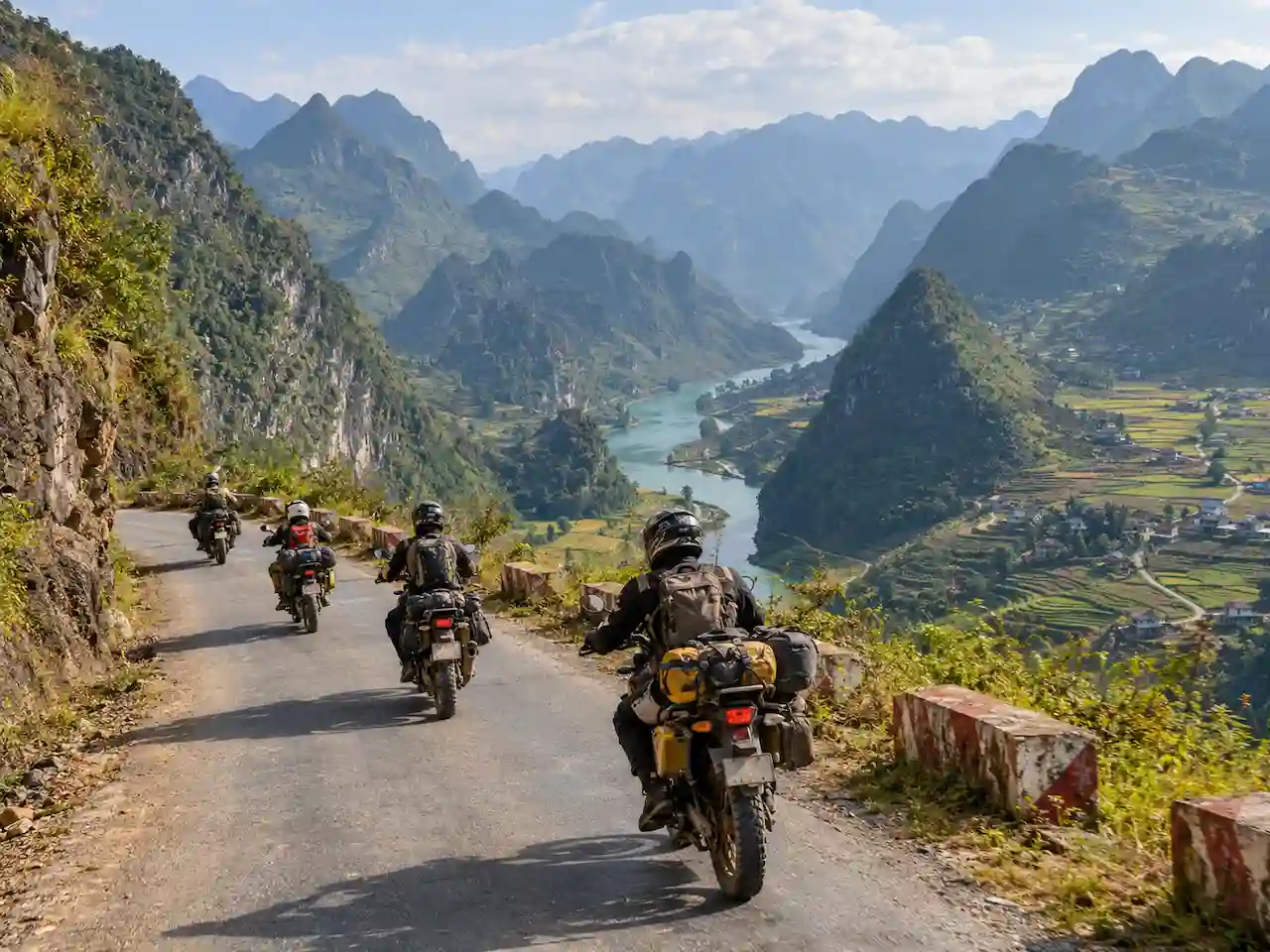
A North Vietnam motorcycle tour to Ha Giang is one of the most exciting ways to explore the country’s remote mountain regions. With winding roads, limestone peaks, traditional villages, and dramatic valleys, Ha Giang offers an adventure that is very different from Vietnam’s busy cities and popular coastal destinations.
Located in the far north of Vietnam, Ha Giang is known for its spectacular mountain scenery and cultural diversity. The region is home to communities with distinct traditions, local markets, and ways of life shaped by the surrounding landscape. Traveling through this area by motorcycle allows visitors to experience both the natural beauty and cultural character of northern Vietnam.
For international travelers from Australia, the United States, and other countries, the journey offers an opportunity to discover places beyond the usual tourist routes. Instead of spending most of your time in large cities, you can explore mountain roads, visit local communities, and enjoy views that make every riding day memorable.
At Tropic Riders, we introduce travelers to motorcycle adventures across Vietnam, including routes through the northern highlands. This guide explains a six-day journey from Hanoi through Tuyen Quang, Dong Van, Meo Vac, and Ba Be before returning toward the capital.
Why Choose a Motorcycle Tour to Ha Giang?
Ha Giang is widely recognized for its remarkable mountain scenery. The region features steep limestone formations, deep valleys, terraced agricultural landscapes, and roads that wind through some of Vietnam’s most dramatic terrain.
A motorcycle journey provides an immersive way to experience these surroundings. Rather than viewing the landscape through a vehicle window, travelers can appreciate the changing environment throughout the journey.
The route also introduces visitors to northern Vietnam’s cultural diversity. Communities across Ha Giang maintain local traditions that can be seen in markets, architecture, clothing, and everyday activities.
Some of the main attractions include:
- Spectacular mountain roads and limestone valleys.
- Traditional markets and ethnic minority communities.
- Scenic destinations such as Dong Van and Meo Vac.
- The famous Ma Pi Leng Pass.
- Natural landscapes around Ba Be National Park.
For travelers who enjoy outdoor adventures, photography, and cultural experiences, Ha Giang offers a memorable introduction to Vietnam’s northern highlands.
Overview of the 5-Day Ha Giang Motorcycle Tour
This journey begins in Hanoi and travels north through Tuyen Quang before reaching the mountainous landscapes of Ha Giang.
The route continues through Dong Van, Lung Cu, and Meo Vac before heading toward Ba Be and returning to Hanoi.
| Tour details | Information |
| Starting point | Hanoi |
| Ending point | Hanoi |
| Duration | 5 days |
| Main destinations | Tuyen Quang, Dong Van, Lung Cu, Meo Vac, Ba Be |
| Main experiences | Mountain roads, cultural villages, local markets, scenic passes |
| Travel style | Multi-day motorcycle adventure |
The itinerary below follows the main destinations described in the existing tour article. The exact overnight stops, daily distances, and sixth-day arrangements should be confirmed with the tour operator before booking.
Day 1: Hanoi to Tuyen Quang
The adventure begins in Hanoi, Vietnam’s capital city. After preparing for departure, the journey heads north toward Tuyen Quang, leaving the busy urban environment behind.
As you travel away from Hanoi, the surroundings gradually change. Urban roads give way to smaller towns, agricultural landscapes, and countryside communities.
This first day introduces travelers to the slower pace of life outside the capital. Depending on the selected route, the journey may pass through areas where traditional houses, farmland, and local markets form part of the everyday scenery.
Discover the Landscapes of Northern Vietnam
The countryside between Hanoi and Tuyen Quang provides an opportunity to experience northern Vietnam before reaching the more mountainous sections of the tour.
Travelers can observe rural communities, agricultural activities, and the natural surroundings that characterize this part of the country.
Tuyen Quang serves as an important destination on the journey north. The province is associated with historical sites, cultural communities, and landscapes that provide a transition toward the highlands.
For motorcycle travelers, the first day is also an opportunity to become familiar with the riding pace, road conditions, and arrangements for the days ahead.
Day 2: Tuyen Quang to Dong Van
The second day takes travelers deeper into northern Vietnam, toward the mountainous landscapes of Ha Giang.
As the journey continues, the terrain becomes more dramatic. Roads wind through valleys and hills, and the surrounding scenery gradually changes into the limestone landscapes associated with the region.
This part of the adventure introduces travelers to some of the cultural and natural attractions that make Ha Giang so distinctive.
Experience Ha Giang’s Mountain Communities
The journey toward Dong Van may include stops around Quan Ba and other locations along the route.
Quan Ba is known for its mountain scenery and is a popular area for visitors traveling through the Ha Giang region.
Depending on the itinerary, travelers may also visit viewpoints, local villages, or traditional markets.
These stops provide opportunities to learn about the communities living in northern Vietnam’s highlands.
Discover the Road Toward Dong Van
The approach to Dong Van features some of the region’s most memorable landscapes.
Limestone formations rise above valleys, while mountain roads connect settlements across the highlands.
Dong Van is an important destination within the Ha Giang region and is known for its traditional architecture, cultural heritage, and surrounding mountain scenery.
After arriving, travelers may have time to explore the town and experience its local atmosphere.
Day 3: Dong Van, Lung Cu, and Meo Vac
Day three is one of the most scenic parts of the journey. The route explores destinations around Dong Van, Lung Cu, and Meo Vac.
This section combines mountain scenery with cultural attractions and some of the best-known roads in northern Vietnam.
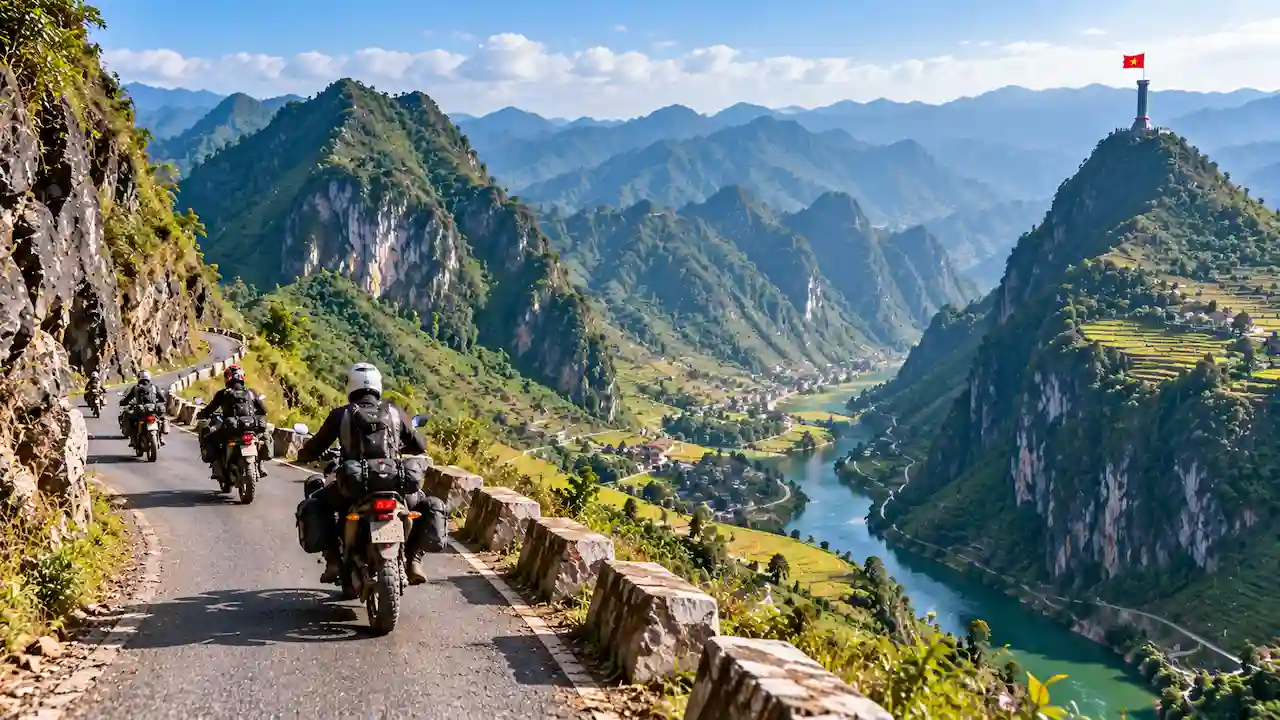
Visit Lung Cu
Lung Cu is located in the far north of Vietnam, near the Chinese border. The area is known for its mountainous surroundings and the Lung Cu Flag Tower, a significant landmark for Vietnamese visitors.
Traveling toward Lung Cu provides opportunities to experience highland landscapes and rural communities.
The roads in this region pass through areas where traditional agriculture and village life remain important parts of the local environment.
Visitors should respect local customs when exploring villages and photographing residents.
Explore the Dong Van Karst Plateau
The Dong Van Karst Plateau is one of the region’s most remarkable natural landscapes.
Its limestone formations, deep valleys, and rugged terrain create scenery that is especially impressive when experienced along the mountain roads.
The plateau is recognized as a UNESCO Global Geopark, reflecting its geological importance and distinctive natural features.
For motorcycle travelers, the area provides a combination of challenging terrain and unforgettable views.
Ride Through Ma Pi Leng Pass
Ma Pi Leng Pass is among the most famous mountain roads in northern Vietnam.
Located between Dong Van and Meo Vac, the pass offers dramatic views of steep mountains and the Nho Que River valley below.
The road winds through high-altitude terrain, with viewpoints overlooking the surrounding landscape.
This section is particularly popular with photographers and motorcycle enthusiasts, although riders must remain attentive to road conditions.
Mountain weather can change quickly, and visibility may be reduced by fog or rain. Travelers should approach the pass carefully and avoid unnecessary risks when stopping for photographs.
Arrive in Meo Vac
After exploring the mountain roads, the journey continues toward Meo Vac.
The town is associated with local markets and the cultural traditions of the surrounding highland communities.
Depending on the travel schedule, visitors may have opportunities to explore the town or experience local food and hospitality.
Day 4: Meo Vac to Ba Be
The fourth day takes travelers away from the limestone landscapes around Meo Vac and toward Ba Be, an area known for its lakes, forests, and natural surroundings.
This section of the journey provides a different perspective on northern Vietnam.
While Ha Giang is famous for its dramatic rocky mountains, the Ba Be region introduces greener landscapes, forested hills, and waterways.
Travel Through Northern Vietnam’s Countryside
The route toward Ba Be passes through areas where smaller settlements and agricultural landscapes form part of the scenery.
Travelers can observe changes in vegetation, terrain, and local environments as the journey continues.
The roads may include winding sections and mountainous terrain, making careful riding and suitable travel planning essential.
Discover Ba Be National Park
Ba Be National Park is one of northern Vietnam’s notable natural attractions.
The park is known for Ba Be Lake, surrounding forests, limestone mountains, and biodiversity.
The area offers a peaceful contrast to the dramatic mountain roads experienced earlier in the tour.
Depending on the itinerary and available time, visitors may be able to explore nearby villages or enjoy the natural surroundings.
Experience Local Hospitality
The Ba Be area is also associated with traditional communities and local homestay experiences.
Staying in locally operated accommodation can provide opportunities to learn about regional food, customs, and everyday life.
Accommodation arrangements vary between tours, so travelers should confirm whether a homestay or another lodging option is included.
Day 5: Ba Be to Hanoi
The original itinerary describes a return journey from Ba Be toward Hanoi, bringing travelers back through the countryside of northern Vietnam.
After several days of mountain scenery and rural destinations, the route gradually approaches more populated areas.
The journey provides another opportunity to appreciate the landscapes and communities encountered throughout the tour.
Enjoy the Final Scenic Roads
Traveling south from Ba Be introduces a different perspective on the northern countryside.
The surrounding scenery changes as the route moves away from the national park and toward lower elevations.
For many travelers, this part of the adventure offers time to reflect on the mountain roads, villages, and natural attractions visited during the journey.
Return to Hanoi
The return to Hanoi marks the conclusion of the route described in the original article.
Although the existing blog identifies the journey as a six-day tour, its detailed itinerary only covers five days. Before publishing or booking, travelers should confirm whether the sixth day includes additional sightseeing, an overnight stop, or a different return schedule.
This clarification is particularly important for international visitors arranging accommodation, flights, or onward travel.
What Makes the Ha Giang Motorcycle Route Special?
The Ha Giang region stands out because it combines remarkable natural scenery with distinctive cultural experiences.
Unlike destinations centered primarily around beaches or city attractions, Ha Giang offers an adventure shaped by its mountainous geography.
The winding roads, highland settlements, and limestone valleys create a journey where the experience of traveling is just as important as reaching each destination.
Another major attraction is the opportunity to discover different communities across the northern highlands.
Local markets, traditional architecture, and regional food provide insight into the area’s cultural diversity.
For travelers interested in exploring additional northern routes, our North Vietnam Motorbike Tours category provides more options.
Is the Ha Giang Motorcycle Tour Suitable for Beginners?
A motorcycle journey through Ha Giang requires careful consideration of riding experience.
The region features narrow mountain roads, steep gradients, sharp turns, and changing weather conditions. Some sections may be demanding for riders unfamiliar with mountainous terrain.
Experienced motorcyclists may enjoy the challenge, but visitors should assess their abilities before choosing to operate a motorcycle independently.
For travelers who prefer not to ride, an Easy Rider passenger arrangement may be worth considering, subject to availability for the selected route.
With an experienced local rider operating the motorcycle, passengers can focus on the scenery without managing the vehicle themselves.
Learn more about this travel option on our Easy Rider Vietnam Motorcycle Tours page. Regardless of the arrangement, travelers should confirm appropriate protective equipment and understand the itinerary before departure.
Motorcycle License Requirements for International Travelers
Visitors from Australia, the United States, and other countries should understand Vietnam’s motorcycle licensing rules before planning a self-riding adventure.
Holding a motorcycle license in your home country does not automatically mean you are legally permitted to ride in Vietnam.
Requirements depend on your driving documentation, the motorcycle category, and whether your international driving permit is recognized under Vietnamese regulations.
Travel insurance is another important consideration. Some policies exclude motorcycle-related incidents or apply specific conditions relating to engine capacity, licensing, and protective equipment.
Before traveling, verify your legal eligibility to ride and confirm the terms of your insurance coverage.
For additional guidance, read Motorcycle License Requirements in Vietnam for International Travelers.
Best Time to Visit Ha Giang by Motorcycle
Ha Giang can be visited during different seasons, but weather conditions have a major influence on the riding experience.
The northern highlands experience cooler temperatures than southern Vietnam, particularly during winter.
Autumn, including September through November, is often popular for mountain scenery and seasonal landscapes. Spring can also be attractive, with changing vegetation and local agricultural activity.
However, conditions vary by location and elevation. Rain, fog, and reduced visibility can occur, and mountainous roads require extra caution during unfavorable weather.
Travelers should avoid assuming that a particular month guarantees ideal riding conditions.
Checking current forecasts and allowing flexibility in the itinerary can help create a safer and more comfortable experience.
What Should You Pack for a Ha Giang Motorcycle Adventure?
Packing appropriately is essential for a multi-day journey through northern Vietnam.
Temperatures can change significantly between Hanoi and the mountain regions, while rain and wind can affect comfort during longer riding days.
Travelers should prepare clothing suitable for varying conditions and avoid carrying unnecessary luggage.
Important items include:
- A suitable helmet and protective riding equipment.
- Waterproof clothing and a rain jacket.
- Warm layers for cooler mountain temperatures.
- Comfortable footwear and personal essentials.
- Travel documents, medication, and a waterproof bag.
Your exact packing requirements will depend on the season, riding arrangement, and accommodation plans.
For a more detailed checklist, see our Vietnam Motorcycle Tour Packing List.
How Much Does a North Vietnam Motorcycle Tour Cost?
The cost of a multi-day motorcycle adventure depends on the tour duration, motorcycle type, accommodation, and services included.
Some itineraries may include a guide, motorcycle, fuel, and accommodation, while meals, personal expenses, insurance, or optional upgrades may be excluded.
Travelers should review the full package details rather than comparing tours based only on their starting prices.
Additional arrangements, such as motorcycle upgrades or support vehicles, may affect the total cost.
Before booking, confirm the daily itinerary, accommodation type, riding arrangements, and any additional charges.
Frequently Asked Questions
How many days do I need for a Ha Giang motorcycle tour?
A journey of approximately five to six days can allow travelers to explore several destinations in northern Vietnam. The exact duration depends on the starting point, daily riding distances, and planned stops.
Can I visit Ha Giang on a guided motorcycle tour?
Yes, guided motorcycle tours are a popular way to explore the region. Travelers should confirm the guide arrangements, itinerary, motorcycle options, and required riding documentation before booking.
Is Ma Pi Leng Pass difficult to ride?
Ma Pi Leng Pass includes winding mountain roads, steep terrain, and exposed viewpoints. It requires careful riding, particularly during rain, fog, or heavy traffic.
Can travelers from Australia and the USA join a Ha Giang tour?
Yes, international visitors can explore Ha Giang through suitable motorcycle touring arrangements. Those planning to ride independently must verify licensing requirements and insurance coverage.
What are the main destinations on this northern Vietnam route?
The route described in this guide includes Hanoi, Tuyen Quang, Dong Van, Lung Cu, Meo Vac, and Ba Be, with scenic attractions around the Dong Van Karst Plateau and Ma Pi Leng Pass.
Explore Northern Vietnam With Tropic Riders
A motorcycle journey through Ha Giang offers an opportunity to discover some of Vietnam’s most memorable mountain landscapes.
From the winding roads around Dong Van to the dramatic views of Ma Pi Leng Pass and the peaceful natural surroundings of Ba Be, the journey introduces travelers to the diversity of northern Vietnam.
At Tropic Riders, we help visitors explore motorcycle touring options across the country. Whether you are an experienced rider or prefer a passenger-based adventure, choosing the right itinerary is the first step toward a rewarding experience.
Contact Tropic Riders to discuss available northern Vietnam motorcycle tours, riding arrangements, and travel dates.


