
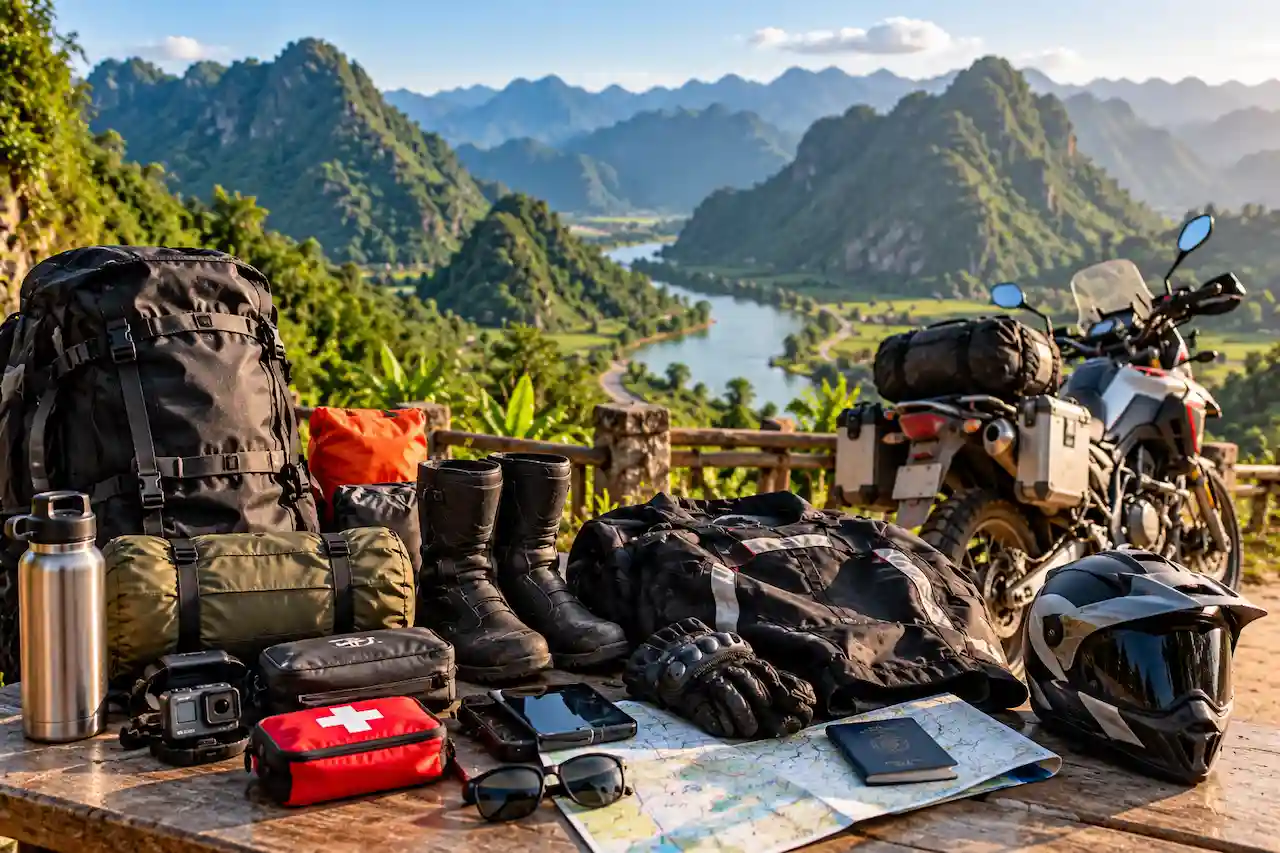
A motorcycle adventure through Vietnam is not an ordinary holiday. You travel through mountain roads, countryside villages, and coastal routes where the weather and riding conditions can change quickly. Having a practical Vietnam motorcycle tour packing list helps you stay comfortable, protect your belongings, and enjoy the journey without carrying unnecessary weight.
For travelers from the USA and Australia, packing for a motorcycle trip requires a different approach from preparing for a regular vacation. I always recommend choosing protective riding gear, versatile clothing, and compact luggage before worrying about extra outfits or accessories. The goal is simple: bring what you need and leave behind what will slow you down.
Why Packing Properly Matters for a Vietnam Motorcycle Tour
Motorcycle travel creates challenges that ordinary sightseeing holidays rarely involve. Luggage space is limited, your belongings may be exposed to rain and dust, and long riding days can become uncomfortable without appropriate clothing. A carefully prepared bag makes these situations easier to manage.
Vietnam also has varied landscapes and weather conditions. Northern mountain routes can be cool and misty, while southern destinations often experience warm, humid conditions. Central coastal routes may involve strong sunshine, sudden showers, and changing temperatures as you travel inland.
I recommend packing according to your route, season, tour duration, and whether you will operate the motorcycle or travel as a passenger. A short countryside excursion does not require the same equipment as a multi day mountain adventure.
Understand Your Tour Before Choosing Your Gear
Before packing, confirm the length of your tour, the expected weather, the motorcycle type, and the available luggage arrangements. Some tours provide protective equipment or assistance with larger bags, while others require travelers to carry their belongings on the motorcycle.
Ask whether helmets, protective jackets, rainwear, and luggage storage are included. You should also confirm whether your main suitcase can remain at your accommodation or whether a support vehicle is available.
Knowing these details prevents unnecessary purchases and helps you avoid bringing equipment that the operator already provides.
Essential Motorcycle Riding Gear You Should Pack
Protective equipment deserves the highest priority because motorcycle riding exposes travelers to risks that ordinary road transport does not. Good gear should provide protection while remaining comfortable enough for changing temperatures and long periods on the road.
Even passengers should take protective clothing seriously. A professional rider handles the motorcycle, but the passenger still needs suitable equipment.
Motorcycle Helmet
A properly fitted motorcycle helmet is the most important piece of protective equipment. Choose a certified helmet that meets an appropriate recognized safety standard and fits securely without excessive movement.
A full face helmet generally provides greater coverage than an open face design. It also offers useful protection from wind, insects, dust, and rain during longer journeys.
If your tour operator provides helmets, confirm the type, condition, sizing, and availability before departure. Travelers who prefer using their own helmets should check airline baggage rules and pack them carefully to avoid damage.
Protective Riding Jacket and Pants
A motorcycle jacket should offer abrasion resistance and suitable impact protection, ideally including armor at the shoulders and elbows. Protective riding pants can provide additional coverage for the hips and knees.
For warm conditions, ventilated motorcycle clothing can help manage heat while maintaining protection. On cooler mountain routes, an additional insulating layer may be necessary.
I recommend choosing versatile gear rather than relying on ordinary fashion jackets or jeans, which generally provide less protection in a motorcycle accident.
Motorcycle Gloves and Riding Boots
Gloves improve grip and help protect the hands from wind, rain, vibration, and injury. Look for motorcycle specific gloves with secure wrist closures, reinforced palms, and suitable ventilation.
Riding boots should provide ankle coverage, stable soles, and protection around vulnerable areas of the foot. Comfortable walking shoes can be packed separately for sightseeing stops.
Avoid relying on sandals, flip flops, or lightweight casual shoes while riding. They provide limited protection and may become uncomfortable during long journeys.
Clothing Essentials for Different Weather Conditions
Vietnam’s climate varies significantly by region and season. Packing the same clothing for every destination can leave travelers unprepared for cold mountain mornings or humid afternoons.
The best approach is to bring lightweight layers that can be adjusted as conditions change. Clothing should also dry quickly because rain and humidity can make laundry difficult during short overnight stops.
Lightweight Clothing for Warm Weather
Breathable shirts, moisture managing base layers, and lightweight trousers are useful for warmer routes. Synthetic or merino fabrics often dry faster than heavy cotton and can be more practical during multi day journeys.
Pack enough casual clothing for evenings and sightseeing, but avoid carrying a separate outfit for every day. If your trip includes several overnight stops, confirm whether laundry facilities will be available.
For longer tours, I prefer clothing that can be washed easily and worn again after drying overnight.
Warm Layers for Northern Mountain Routes
Mountainous destinations can become noticeably cooler than coastal cities, particularly during winter and at higher elevations. Early morning rides may involve cold wind, fog, and damp conditions.
A compact thermal base layer, insulating fleece, and wind resistant outer layer can make these journeys more comfortable. Warm gloves and a neck covering may also be useful when temperatures drop.
Travelers planning mountain routes should review the forecast shortly before departure instead of relying only on general seasonal averages.
Rain Protection for Motorcycle Travel
Rain protection is essential because tropical showers can develop quickly, even when the day begins with sunshine. A waterproof outer layer designed for motorcycle riding can help keep clothing dry and reduce discomfort during long periods of rain.
Waterproof overtrousers, boot covers, and protective luggage covers are also worth considering. Choose rainwear that fits securely over riding equipment without loose fabric that could interfere with motorcycle controls.
I recommend testing rain gear before traveling. Equipment that is difficult to put on or uncomfortable while seated may become frustrating during roadside weather changes.
Choosing the Right Luggage for a Motorcycle Tour
Motorcycle luggage should be compact, secure, and easy to manage. Unlike a regular holiday, where a large suitcase can remain in a hotel room, motorcycle travel often involves moving between destinations with limited storage space.
A well planned Vietnam motorcycle tour packing list should prioritize waterproof storage, balanced weight, and quick access to frequently used items. The ideal luggage arrangement depends on the motorcycle, tour duration, and whether a support vehicle is available.
Waterproof Duffel Bags and Motorcycle Saddlebags
A waterproof duffel bag is a practical choice for multi day journeys because it protects clothing and personal belongings from rain and road spray. Soft motorcycle saddlebags can also work well when properly fitted and secured.
Avoid oversized luggage that extends too far beyond the motorcycle or interferes with the rider’s movement. Heavy bags can affect handling, particularly on winding roads or uneven surfaces.
Before departure, ask your tour operator about luggage size limits and whether bags will be carried on the motorcycle or transported separately.
What Should You Keep in Your Daypack?
A small daypack is useful for items you may need during sightseeing stops or short breaks. However, it should remain lightweight and comfortable, especially if you will wear it while riding.
I recommend carrying these essentials:
- Passport copy, emergency contact information, and necessary travel documents.
- Phone, charging cable, and a compact power bank.
- Sunscreen, lip balm, sunglasses, and personal medication.
- A refillable water bottle and small snacks.
- Lightweight rain protection and a waterproof pouch for valuables.
Keep important documents and electronic devices protected from moisture. If your motorcycle has suitable storage, use it to reduce the weight carried on your shoulders.
Important Travel Documents and Insurance
Travel documents deserve the same attention as riding equipment. A missing document can disrupt your itinerary, create difficulties during accommodation check ins, or prevent you from participating in certain activities.
Travelers should carry a valid passport, appropriate entry authorization, booking confirmations, and emergency contact details. Keep digital copies in a secure location and carry accessible copies where appropriate.
If you plan to operate a motorcycle, confirm that you have driving authorization recognized under Vietnamese law. American and Australian motorcycle licenses and their standard issued international driving permits do not independently authorize ordinary motorcycle riding in Vietnam.
Insurance is equally important. Check whether your policy covers motorcycle activities, the intended vehicle category, emergency medical treatment, and passenger travel if applicable. I recommend resolving these questions before departure rather than relying on assumptions after arriving.
Electronics and Personal Accessories Worth Bringing
Electronics can make motorcycle travel easier, but carrying too many devices creates unnecessary weight and increases the risk of damage. A smartphone, reliable charging equipment, and a waterproof storage pouch are usually more useful than a collection of expensive accessories.
Download offline maps before traveling through rural areas where mobile coverage may be inconsistent. If you plan to record your journey, bring a compact camera with secure mounting equipment and enough storage for photographs and videos.
For travelers arriving from the USA or Australia, checking electrical compatibility is important. Vietnam commonly uses 220V electricity, so confirm that your chargers support the local voltage and bring an appropriate plug adapter.
Personal Health and Comfort Items
A small personal care kit can improve comfort during long riding days. Include any prescribed medication, basic first aid supplies, insect repellent, sunscreen, and personal hygiene products.
Sun exposure can be significant even when temperatures feel comfortable. Apply sunscreen to exposed skin and drink water regularly throughout the day.
I also recommend bringing a small microfiber towel and a few resealable bags. These simple items help manage wet clothing, dusty accessories, and small belongings during overnight stops.
Real World Scenario: Packing for a Five Day Motorcycle Adventure
Consider an American traveler preparing for a five day motorcycle journey through Vietnam’s Central Highlands. The itinerary includes warm afternoons, cooler mountain mornings, countryside stops, and overnight stays in different towns.
Initially, the traveler plans to bring a large suitcase, several pairs of shoes, multiple heavy jackets, and enough clothing for every day. However, after reviewing the itinerary and confirming the luggage arrangements, the traveler realizes that most of these items are unnecessary.
Instead, the traveler prepares a compact waterproof bag containing lightweight clothing, a warm layer, rain protection, comfortable walking shoes, and essential personal items. Protective motorcycle equipment is confirmed with the tour operator before departure, and important documents remain accessible in a small daypack.
This illustrative scenario demonstrates a practical lesson: successful motorcycle packing is not about bringing more equipment. It is about choosing the right equipment for the journey.
Common Packing Mistakes to Avoid
Many travelers pack according to what they might need rather than what they will actually use. This approach often results in heavy luggage, unnecessary purchases, and difficulty finding important belongings during the trip.
I recommend avoiding these common mistakes:
- Packing too many clothes instead of choosing lightweight, reusable layers.
- Assuming the tour operator provides all protective riding equipment.
- Bringing ordinary shoes without suitable motorcycle protection.
- Forgetting waterproof storage for electronics and travel documents.
- Carrying large suitcases without confirming luggage arrangements.
A little preparation can prevent these problems. Review the itinerary, confirm the available equipment, and remove anything that does not serve a clear purpose.
What Motorcycle Tour Equipment Should You Confirm Before Booking?
Before purchasing additional equipment, find out what your tour package includes. Tour arrangements can vary, and equipment availability should never be assumed.
Ask whether helmets, protective clothing, rainwear, luggage transportation, and motorcycle accessories are provided. You should also confirm whether equipment is available in your size and whether you can bring your own.
Our Vietnam motorcycle tour package guide explains the types of services and arrangements travelers should review before confirming their trip.
Check the Motorcycle and Luggage Arrangements
The motorcycle itself influences what you should pack. Different models have different luggage capacities, seating positions, and storage options.
Before departure, review the available motorcycles and confirm which equipment is suitable for your selected route. Our motorcycle fleet and equipment page provides useful information about the motorcycles used for our adventures.
If you are traveling as a passenger, ask whether your luggage will be transported separately or secured to the motorcycle. This can affect how much clothing and personal equipment you should bring.
Why Choose Us
At Tropic Riders, we believe a memorable motorcycle journey begins with careful preparation, suitable equipment, and an itinerary that matches your travel preferences.
- Varied motorcycle adventures: Explore different tour durations, destinations, and scenic routes.
- Flexible travel experiences: Discuss guided riding and passenger tour options according to your needs.
- Motorcycle information: Review available motorcycles and ask about suitable riding equipment.
- Practical tour planning: Confirm luggage arrangements, tour inclusions, and travel requirements before departure.
- Personalized itineraries: Explore motorcycle journeys based on your interests, available time, and preferred destinations.
I encourage travelers to prepare their equipment and travel documents before arriving. This helps make the first day of the adventure more organized and comfortable.
For personalized assistance with tour planning and packing questions, contact our motorcycle tour team before confirming your travel arrangements.
Frequently Asked Questions
What Should I Pack for a Motorcycle Tour in Vietnam?
Pack appropriate protective riding equipment, lightweight clothing, rain protection, comfortable walking shoes, travel documents, personal medication, and a waterproof bag. Your final selection should depend on the route, season, tour duration, and equipment provided by the operator.
Do Motorcycle Tour Operators Provide Helmets and Riding Gear?
Equipment arrangements vary between operators and tour packages. Some provide helmets, protective clothing, and rainwear, while others offer limited equipment or require travelers to bring certain items. Always confirm what is included before booking.
What Is the Best Luggage for a Multi Day Motorcycle Tour?
A compact waterproof duffel bag or properly fitted motorcycle saddlebags are practical choices. Soft luggage is often easier to manage, but the best option depends on the motorcycle and whether a support vehicle is available.
Do I Need Warm Clothing for Motorcycle Touring in Vietnam?
Warm clothing is recommended for mountain routes and cooler travel periods. A thermal layer, lightweight fleece, and wind resistant jacket can help maintain comfort during early morning rides and changing weather conditions.
Can I Bring a Large Suitcase on a Motorcycle Tour?
Large suitcases may be difficult to transport on a motorcycle. Some operators offer luggage storage or separate transportation, but availability depends on the tour. Confirm the luggage arrangements before departure and consider using a smaller waterproof bag for the journey.
Conclusion
A practical Vietnam motorcycle tour packing list helps travelers prepare for changing weather, limited luggage space, and long riding days. Prioritize protective equipment, waterproof storage, essential documents, and versatile clothing. With the right preparation, you can spend less time managing your belongings and more time enjoying Vietnam’s scenic roads and cultural experiences.


